
Descent, Water, and the Flow of Fate
The Wind-Up Bird ChronicleThis thread follows the novel’s changing wells and waters as images of blocked movement, forced waiting, and the uncertain return of life.
increasing Bearing strength in each event
 decreasing
Bearing strength in each eventdecreasingThe Warning About Water
A Prophecy Without Detail
Mr. Honda’s Instruction
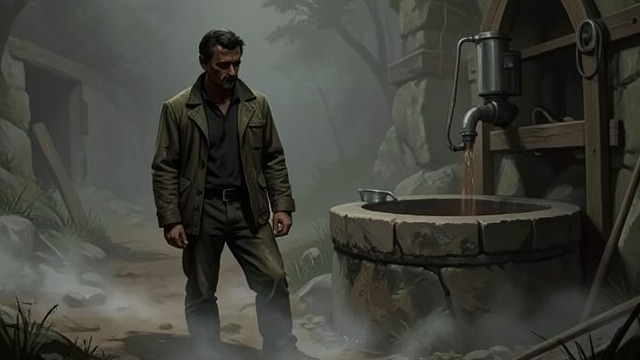
Mr. Honda tells Toru that the present is a time to remain still and warns him to be careful of water. His explanation comes from memories of thirst and danger during the war, but he cannot specify what future threat the warning predicts.
A Seed of Meaning
The advice initially seems too general to guide action. Later events make water a recurring sign of absence, obstruction, and danger, lending retrospective weight to a warning that could not be understood when first spoken.
The Empty Well
A Hole Without Water
The Abandoned Structure
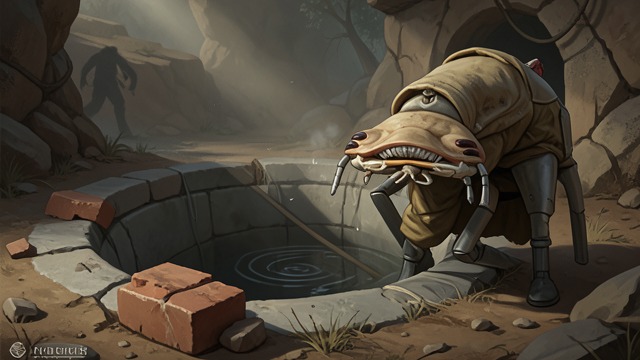
May Kasahara shows Toru a dried-up well on the grounds of the Miyawaki house. A dropped piece of brick produces only a dry thud, confirming that the opening seems to lead to an empty bottom.
A Convergence of Images
The well joins other incomplete spaces in Toru’s surroundings: a bird that cannot fly and an alley without an exit. Together they suggest a world whose routes have been sealed or whose natural movement has stopped.
The Descent into Stillness
Choosing the Deepest Well
A Deliberate Withdrawal
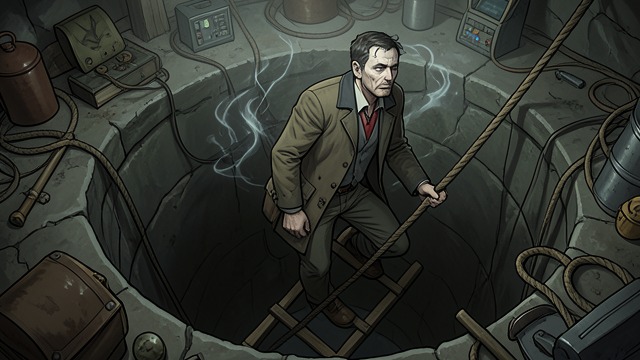
Toru descends into the dry well with a rope ladder, water bottle, and supplies, seeking a place where he can concentrate on the collapse of his marriage. He treats physical separation from ordinary life as a means of approaching reality more clearly.
Waiting in Darkness
At the bottom, familiar measures lose authority: light, time, bodily certainty, and the sense of a stable self. The well becomes not merely a shelter but a testing ground where Toru must experience how little he can control.
The Ladder Pulled Away
The Cost of Waiting
A Human Interruption
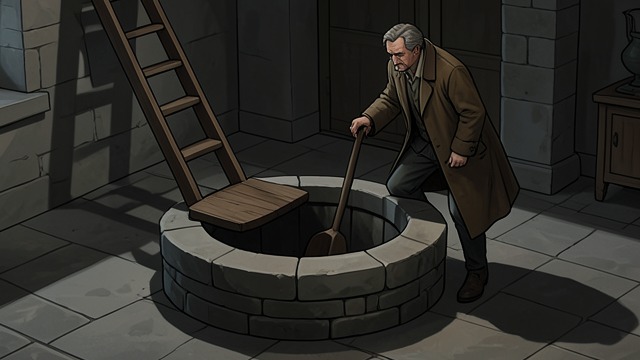
May Kasahara pulls up the ladder and closes the well cover, leaving Toru below without an easy route back. Her decision turns his chosen retreat into an imposed confinement and makes his dependence on another person unmistakable.
Waiting as Exposure
Hunger, thirst, and darkness force Toru to encounter the bodily consequences of waiting. The episode complicates Mr. Honda’s advice to stay still: waiting may be necessary, but it can also leave a person exposed to someone else’s power.
The Return of the Water
A Changed Well
A Hidden Current Reappears
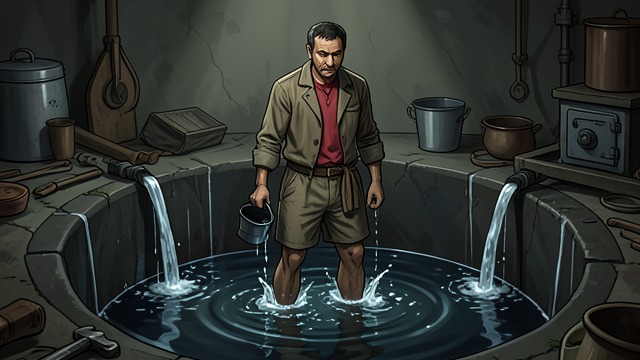
After Toru’s struggle in Room 208, he finds himself back in the well, but water has returned and is rising around him. What had seemed permanently dry is suddenly active, and the change threatens to turn the place of his chosen retreat into a trap.
Consequence and Renewal
The new water may register a change in the obstructed flow that has shaped Toru’s story, but it also presents an immediate danger. The well’s transformation therefore refuses a simple equation between water and healing: renewed movement can sustain life and endanger it at once.
During Toru and Kumiko’s early visits to Mr. Honda
Early summer 1984, during Toru’s meeting with May Kasahara
Summer 1984, after Kumiko disappears
During Toru’s first extended stay in the well
Near the climax, after Toru returns to the well from Room 208
